The
History of Locks
Museum & Archive curator: Brian Morland
Preserving artefacts from antiquity to the cutting edge examples of today
Museum Notice Board


In the mean time its hoped you enjoy browsing our Galleries.
Brian Morland
A note about copyright. This project represents considerable time and effort, please therefore respect our work. Permission is given to download for personal, non-
You can HELP in our next Research Project
There is more to locks and keys than their mechanics or electronics.
Popular Themes & Topics
EXPO 2023
Next year sees the bi-
Admission is free so look forward to seeing you there.
Welcome To Our World...

Welcome to the fascinating world of Locks & Keys...
The History of Locks Museum is dedicated to one of mans most fundamental human needs; security. After food man looks for shelter; shelter from the extremes of weather, shelter from the natural world but the largest threat history has shown is the threat from his fellow man! Therefore whatever shelter,structures or enclosures are devised by man a means of privileged access has always been high in priorities. This site therefore through industrial archaeology explores mechanisms that provide privileged access...
The History and Development of the Lock and Key
The lock and key to most people is a mysterious object, we put all our trust and faith into it when we lock the front door or lock up the safe. Even though we religiously follow this ritual, often many times each day, few are fully aware of what mechanical forces have been activated, but we have fulfilled a very fundamental psychological need. We go about our daily routines in the knowledge that our homes and possessions are safe. We have performed the ritual of locking up.
Archaeology is gaining in popularity. TV programs and films, like, on the one hand Time Team and on the other Indiana Jones have done much to capture the imagination and inspire. In the field of Industrial Archaeology or Industrial History, Locks and Keys are no less worthy of attention. In fact its sometimes said that the craft of the locksmith is the second oldest profession! Certainly mans possessions have always been coveted and therefore the need to keep them secure has been a necessity from the earliest times.
The study of historical or antique locks and keys is a specialised sector of Industrial Archaeology. Not only does it look at the various ways in which a mechanical device achieves its aim but also says something about the basic need on the one hand to protect and secure property and possessions, but it also reminds us of another, darker, aspect of the human instinct.
Of course there are also interesting stories surrounding some artefacts in the collection. Like any custodian of a collection of artefacts we research into their use and background. Take for instance the Boda-
These fascinating aspects are what these virtual History of Locks Museum pages are all about and will hopefully bring some of the mysterious objects of the locksmiths' art and craft alive.
To this end the project not only attempts to gather and display the beautiful and ingenious items of metalwork but also books, manuscripts, catalogues, and other printed matter on the subject. We all know the analogy of a grain of sand doesn't make a beach... but hopefully with enough snippets of information a more complete picture can be built, understood and enjoyed. We especially acknowledge and are grateful to the many individuals that have helped and contributed. Please feel free to make contact via the e-
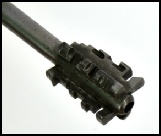
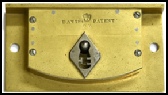
Above:The key that guarded the secrets of Hitler's Germany, during WWII, and Below: the lock that protected UK government secrets on 18th/19th century Dispatch Boxes.